
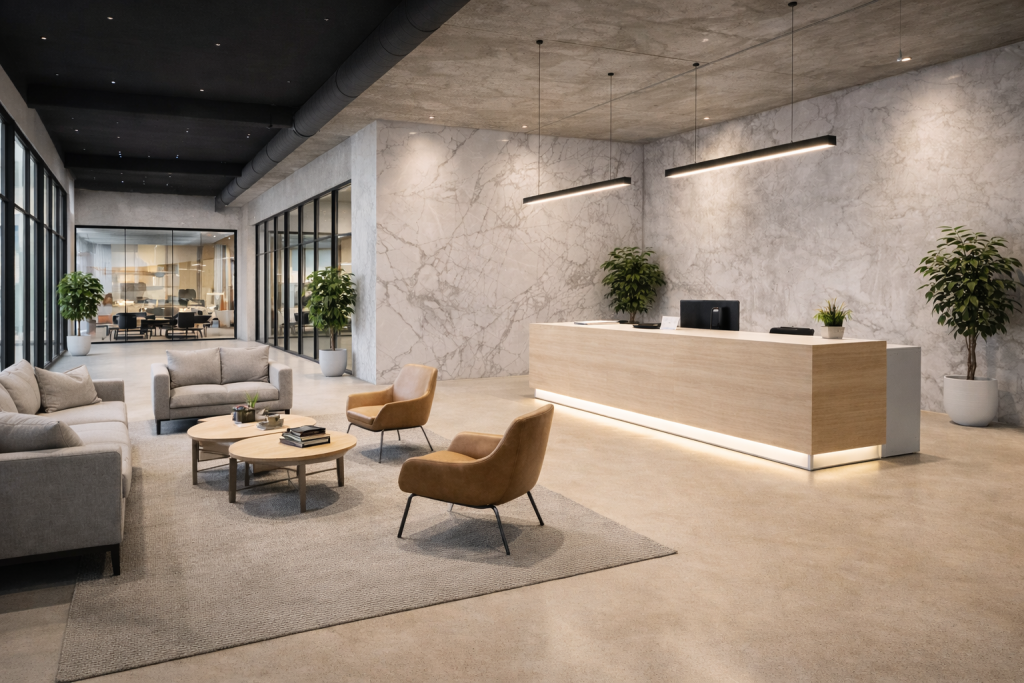
The Problem: When Design Looks Good but Sounds Bad
Modern commercial interiors are often designed with a strong focus on aesthetics.
Open ceilings, glass walls, polished concrete, and wood finishes all contribute to clean, contemporary spaces. But these same design choices can introduce a common and often overlooked issue:
poor acoustics.
In many cases, a space can look impressive while still being difficult to use because of echo, reverberation, and poor speech clarity.
Why Acoustics Matter More Than People Realize
Acoustic performance has a direct impact on how a space functions.
In environments such as offices, conference rooms, hospitality spaces, and lobbies, poor acoustics can lead to:
Difficulty hearing conversations
Reduced speech clarity in meetings
Increased background noise
A less comfortable overall environment
In some cases, people may even avoid certain spaces because they are difficult to use effectively.
The Challenge: Balancing Aesthetics and Performance
Architects and designers are often balancing multiple priorities:
Visual design
Material selection
Budget
Functionality
Acoustic performance can sometimes be addressed late in the process, which limits the available solutions.
As a result, many spaces rely on hard, reflective materials that contribute to acoustic issues.
A Better Approach: Integrating Acoustics into Design
The most effective way to address acoustics is to consider it as part of the architectural design from the beginning.
By integrating acoustic materials into walls and ceilings, designers can:
Reduce echo and reverberation
Improve speech clarity
Maintain a cohesive visual design
Create more comfortable and functional spaces
This approach avoids the need for add-on acoustic treatments that may not align with the overall design intent.
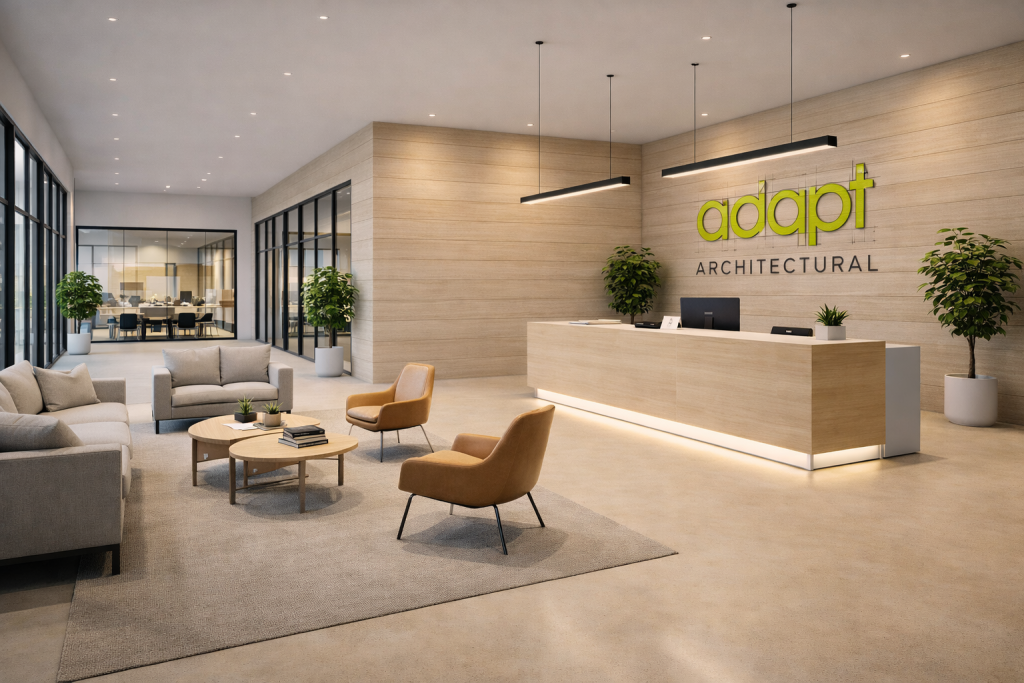
Example Solution: Wood-Look Acoustic Systems
Wood finishes are widely used in modern interiors because they add warmth and visual appeal.
However, traditional wood surfaces are highly reflective and do little to improve acoustics.
Acoustic systems like the BTW™ (Better Than Wood) system provide a way to achieve the look of wood while also improving sound performance.
These systems are designed to:
Deliver a wood-look architectural finish
Reduce echo and reverberation
Maintain consistent appearance across large surfaces
Provide durability and stability in commercial environments
By combining aesthetics and performance, they help solve one of the most common challenges in modern interior design.
Where This Matters Most
Acoustic design is especially important in spaces such as:
Corporate offices and collaboration areas
Hospitality environments and restaurants
Lobbies and open public spaces
Education and training environments
In each of these settings, the ability to clearly hear and communicate has a direct impact on the user experience.

Conclusion: Design for How a Space Looks — and Sounds
As workplace and commercial environments continue to evolve, the expectations for both aesthetics and performance are increasing.
A well-designed space should not only look good, but also function effectively for the people using it.
By considering acoustics as part of the design process, it is possible to create environments that are both visually appealing and acoustically comfortable.
Learn more about the BTW™ Acoustic System →