
Data centers are being built at a remarkable pace.
Driven by cloud computing, artificial intelligence, edge computing, and the growing demand for digital infrastructure, these facilities are becoming a critical part of the modern built environment.
But as data center construction accelerates, one challenge becomes increasingly important:
how to design infrastructure that can adapt over time.
Power, data, and connectivity requirements continue to change. Equipment layouts evolve. Support spaces get reconfigured. Technology demands increase.
In this environment, infrastructure flexibility is no longer just a convenience — it is a planning priority.
Data Center Spaces Are More Than Server Rooms
When people think about data centers, they often think about server racks, cooling systems, and large equipment rooms.
But a modern data center campus can include many different types of spaces, including:
- network operations centers
- monitoring rooms
- control rooms
- security areas
- technical support spaces
- staging and deployment areas
- office and administrative areas
- training and collaboration spaces
Each of these environments requires reliable access to power and data.
And unlike traditional office spaces, these areas often need to respond quickly to changes in technology, staffing, equipment, and workflow.
That creates a need for infrastructure that is both organized and adaptable.
The Problem With Fixed Infrastructure
Traditional construction methods often rely on fixed power and data locations.
Once conduit, trenching, floor boxes, or wall-based infrastructure is installed, changes can become difficult and disruptive.
This can create problems when:
- equipment layouts change
- new technology is added
- workstations are reconfigured
- monitoring stations expand
- cable paths need to be adjusted
- project schedules require faster installation
In technology-driven environments, fixed infrastructure can become a limitation.
The more often a space needs to change, the more important it becomes to have a system that allows access, adjustment, and reconfiguration without major construction.
Why Low-Profile Access Flooring Makes Sense
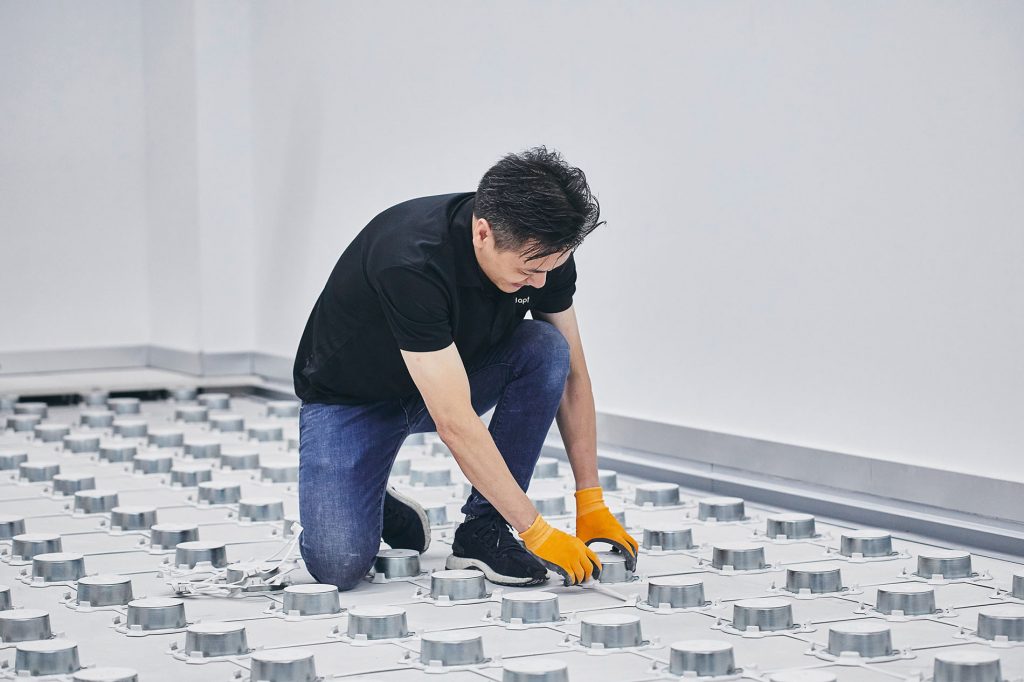
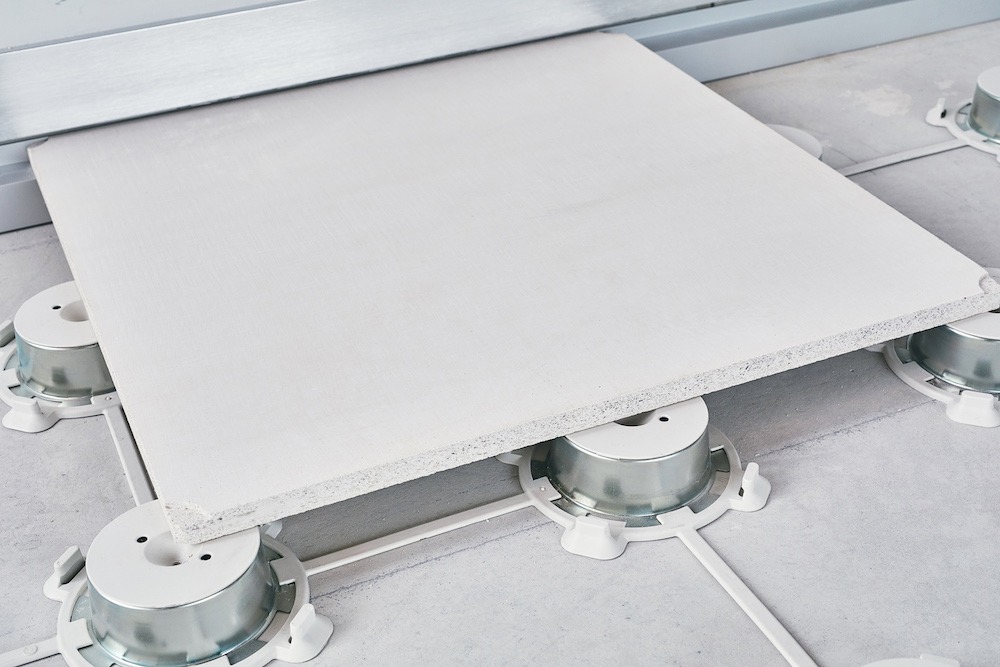
Low-profile access flooring creates an accessible cavity beneath the finished floor surface.
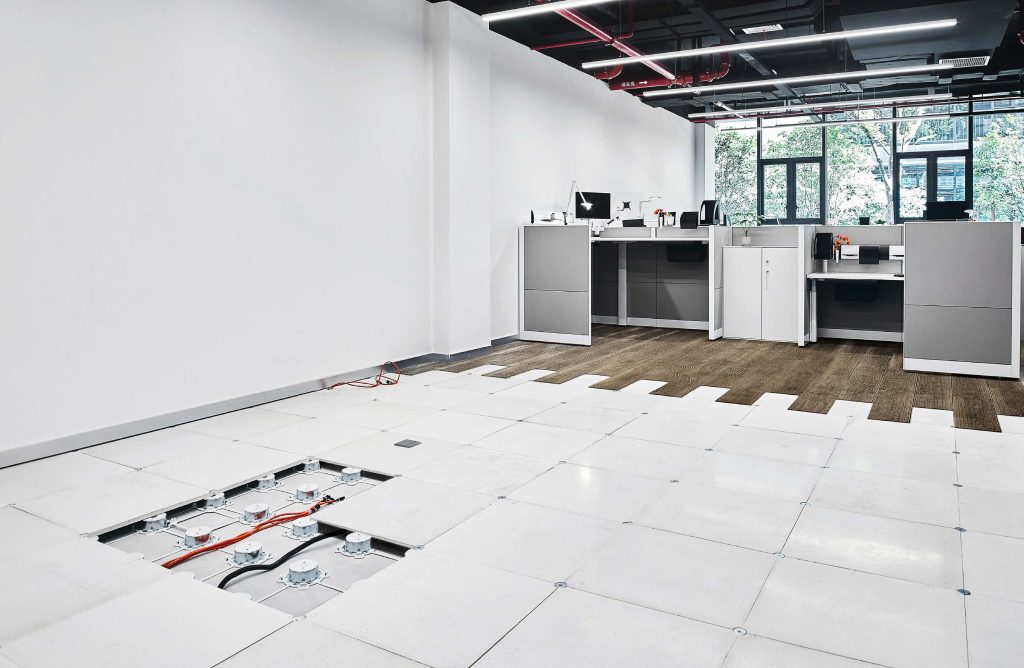
That cavity can be used to route power and data cabling where it is needed, while keeping the visible space clean and organized.
For data center support environments and technology-intensive spaces, this approach can help:
- simplify cable routing
- reduce visible cabling
- improve access for future changes
- support changing workstation layouts
- reduce disruption during reconfiguration
- create a cleaner finished environment
Instead of locking power and data into fixed locations, low-profile access flooring provides a more adaptable pathway below the floor.
Easier Site Prep with Height Adjustability
Site conditions are not always perfect, especially in renovation or retrofit projects.
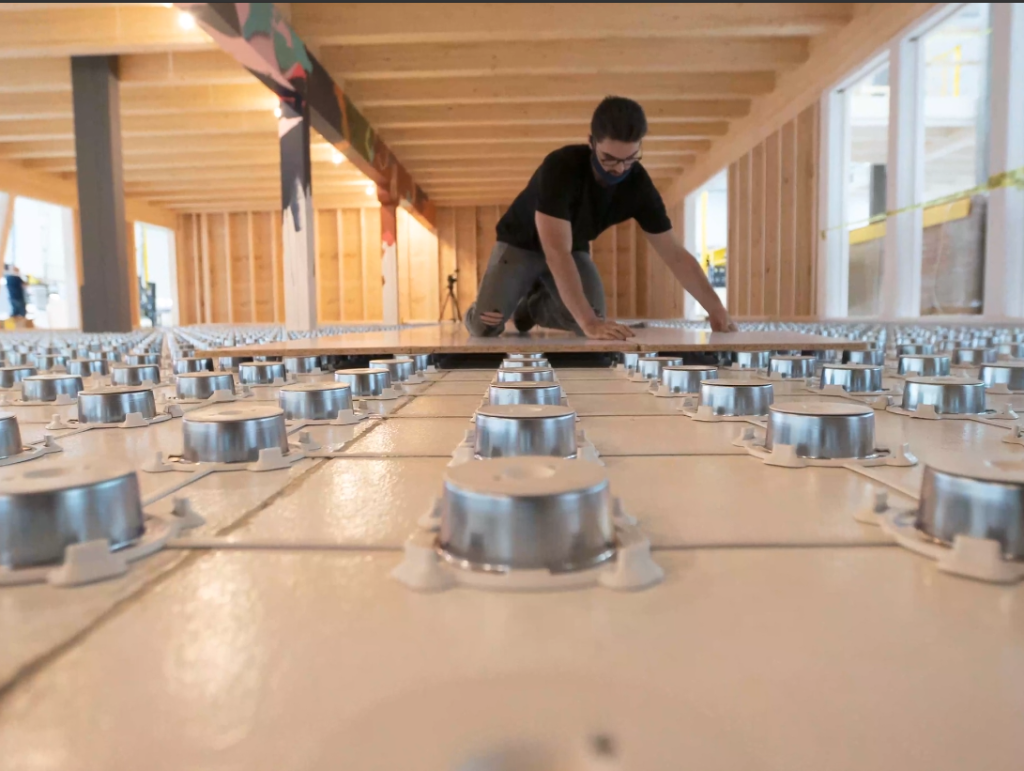
One advantage of LPC Flooring is that it can be specified with height-adjustable components, allowing the system to better accommodate existing floor conditions and finished floor height requirements.
This can help simplify site preparation by allowing installers to make adjustments during installation rather than relying on extensive floor preparation before the system is installed.
For project teams, height adjustability can help support:
- easier leveling during installation
- better accommodation of uneven substrates
- more flexibility when working with existing conditions
- reduced need for extensive site preparation
- a cleaner path to achieving the desired finished floor height
In fast-moving data center support spaces, operations areas, and technology-driven environments, easier site prep can help reduce installation complexity and keep projects moving forward.
LPC Flooring for Flexible Power and Data Distribution
LPC Flooring from Adapt Architectural is a low-profile cavity flooring system designed to support flexible power and data distribution, with height-adjustable options that can help simplify site prep and installation.
The system creates an accessible underfloor pathway that allows cabling to be routed through the floor cavity and adjusted as needs change.
For technology-driven environments, this can be valuable in spaces such as:
- network operations centers
- data center control rooms
- monitoring workstations
- technical support areas
- edge computing support spaces
- equipment staging areas
- command and security rooms
- data center office and administrative areas
LPC helps create a cleaner, more adaptable environment by keeping infrastructure accessible below the finished floor surface.
Supporting Fast-Moving Projects
Data center and technology projects often move quickly.
Schedules are compressed. Requirements change. Equipment and cabling needs may evolve during planning, installation, or future operation.
A flooring system that supports easier installation, adjustable site prep, and future access can help reduce some of that complexity.
Instead of relying only on fixed pathways, low-profile access flooring allows teams to build flexibility into the space from the beginning.
That can be especially important in retrofit projects, expansions, and support areas where traditional raised flooring may not be practical due to floor height limitations.
Design for Today — and What Comes Next
One of the biggest challenges in data center-related construction is that technology does not stand still.
The infrastructure that works today may need to support different requirements in the future.
A flexible flooring approach can help support:
- future cabling changes
- workstation reconfiguration
- technology upgrades
- new monitoring or control layouts
- cleaner cable management
- long-term adaptability
In fast-changing environments, the ability to access and modify infrastructure later can be just as important as the initial installation.
Where LPC Can Fit
LPC Flooring can be considered for many technology-focused spaces associated with data centers and mission-critical facilities, including:
- operations centers
- control rooms
- security monitoring spaces
- technical work areas
- administrative support areas
- training rooms
- collaboration spaces
- technology-intensive office areas
For heavy equipment areas, server rack environments, or specialized data halls, project teams should always confirm load requirements, cooling requirements, code requirements, and technical specifications before selecting any flooring system.
The key advantage of LPC is its ability to provide low-profile, accessible infrastructure pathways for spaces where power and data flexibility are critical.
Conclusion: Flexible Infrastructure Matters
As data center construction continues to grow, the spaces surrounding and supporting those facilities need to be designed for change.
Power and data requirements will continue to evolve.
Workstations will be reconfigured.
Technology will continue to advance.
Low-profile access flooring gives project teams a way to build flexibility into the foundation of the space, helping support cleaner installations, easier site preparation, simpler future changes, and more adaptable environments.
For technology-driven spaces, infrastructure flexibility is not just a construction detail.
It is part of long-term performance.
Learn More
Explore LPC Flooring from Adapt Architectural:
https://adapt-global.com/en-us/adapt-architectural/lpc-flooring/