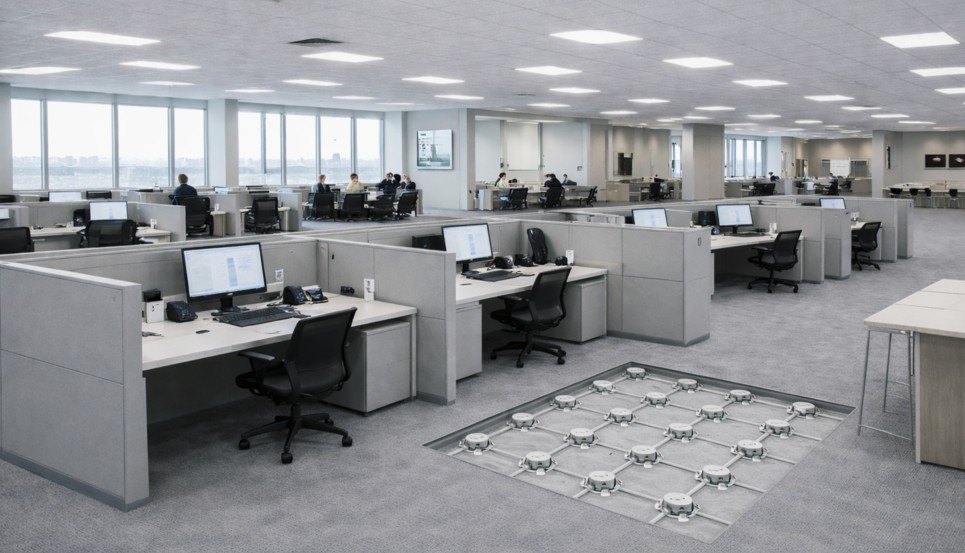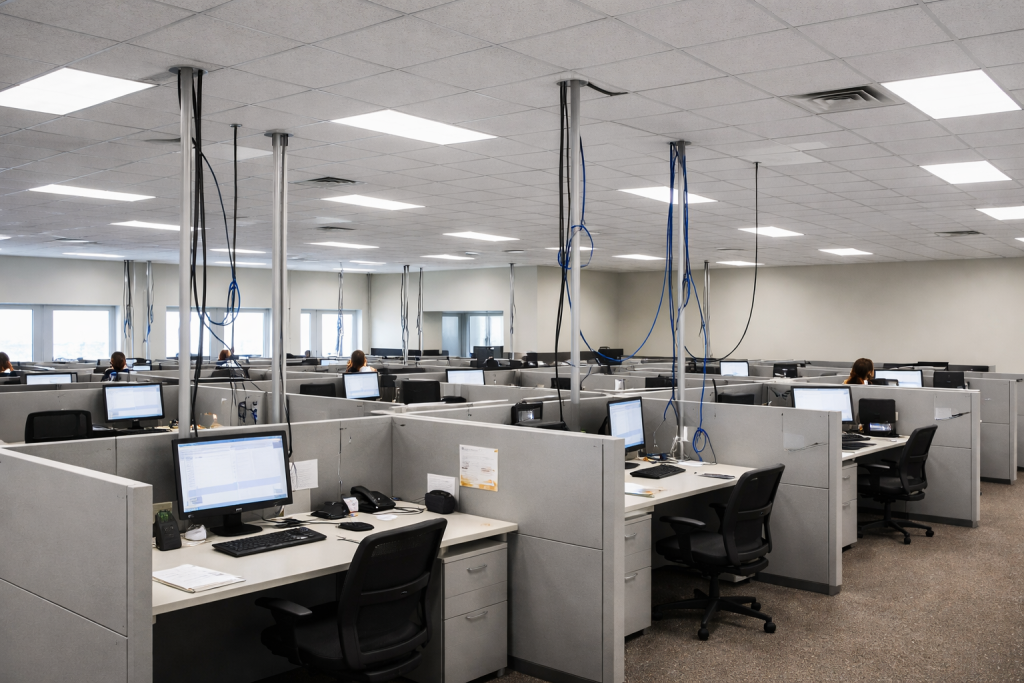
The Problem: Infrastructure That Can’t Adapt
Modern workspaces are designed to evolve.
Teams grow, layouts change, and technology continues to advance. But one part of the environment often struggles to keep up:
the infrastructure beneath the workspace.
Traditional cabling methods rely on:
- trenching
- fixed floor boxes
- hardwired layouts
Once installed, these systems can make even small changes complex and disruptive.
Why It Matters: Change Is Constant
In today’s environments, flexibility is no longer optional.
Organizations frequently need to:
- reconfigure layouts
- support new technologies
- accommodate different teams
- adapt to hybrid work models
When infrastructure is fixed, these changes often require:
- construction work
- downtime
- additional cost
This can slow down projects and limit how effectively a space can evolve.
The Challenge: Planning for the Unknown
When a space is first designed, it’s difficult to predict how it will be used over time.
As a result, infrastructure decisions made early in a project can become constraints later.
This is especially true in:
- corporate offices
- commercial buildings
- renovation projects
- technology-driven environments
The ability to adapt becomes just as important as the initial design.
A Better Approach: Build Flexibility Into the Foundation
One of the most effective ways to support long-term adaptability is to integrate flexibility directly into the floor.
Low-profile raised access flooring creates a cavity beneath the walking surface, allowing power and data to be routed where needed — and adjusted as requirements change.
This approach allows organizations to:
- access cabling without disruption
- reconfigure layouts more easily
- reduce the need for invasive construction
- support evolving technology
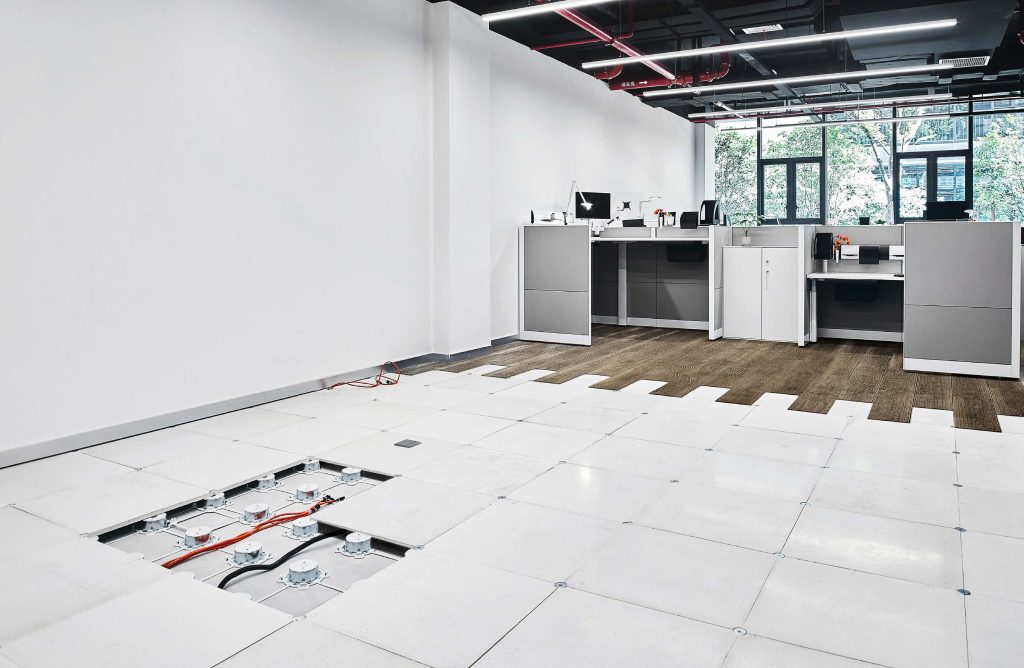
Example Solution: Low-Profile Raised Access Flooring
Systems like LPC™ (Low Profile Cavity) flooring provide a flexible infrastructure solution that integrates seamlessly into modern spaces.
By creating an accessible pathway beneath the floor, LPC allows:
- power and data to be routed anywhere within the workspace
- quick access for maintenance or changes
- faster installation compared to traditional methods
- reuse of flooring components in future configurations
Because the system is low-profile, it can be used in a wide range of environments, including retrofit and renovation projects where floor height is limited.
Where This Matters Most
Flexible infrastructure is especially valuable in environments such as:
- corporate offices
- call centers and operations teams
- technology-focused workspaces
- commercial renovations
In each of these settings, the ability to adapt quickly can significantly improve both efficiency and long-term performance.
Conclusion: Design for Change, Not Just for Today
Modern workspaces are no longer static.
They are expected to evolve over time — and infrastructure should support that evolution, not limit it.
By incorporating flexibility into the foundation of a space, organizations can create environments that are easier to adapt, easier to maintain, and better suited for the future.